
How Does Platinum Resistance Thermometer Work?
TL;DR — Quick Summary
A platinum resistance thermometer measures temperature by detecting changes in the electrical resistance of platinum wire or film as temperature varies. It is highly accurate, stable, and widely used in industries requiring precise temperature control between -200°C and 500°C.
Also known as: RTD, PRT, Platinum Resistance Thermometer, Pt100 Sensor, Pt1000 Sensor, Pt500 Sensor, Pt200 Sensor.
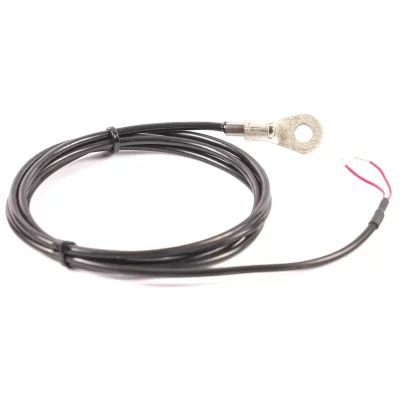
How Does a Platinum Resistance Thermometer Work?
PRTs operate on a simple, reliable principle: the electrical resistance of platinum changes predictably and repeatably with temperature.
- The sensor consists of a platinum wire or film, either wound around a ceramic or glass core or deposited on a ceramic substrate.
- As temperature changes, the resistance of the platinum changes.
- This change in resistance can be precisely measured using electrical circuits, and then converted into a temperature reading.
The use of platinum is critical because it has an excellent linear relationship between resistance and temperature, exceptional stability over time, and resistance to corrosion.
Standards and Variants
All resistance thermometers manufactured by Peak Sensors comply with the IEC 60751:2022 international standard for Industrial Platinum Resistance Thermometer Sensors, ensuring accuracy and interchangeability.
Common types of platinum resistance thermometers include:
- Pt100: 100 ohms resistance at 0°C (most common)
- Pt1000: 1000 ohms at 0°C (more sensitive)
- Other variants: Pt500, Pt200 sensors.
Why Choose a Platinum Resistance Thermometer?
- High accuracy and stability
- Wide temperature range
- Good repeatability
- Durable and corrosion-resistant
Frequently Asked Questions (FAQ)
What temperature range can a PRT measure?
Typically between -200°C and 500°C, depending on the specific sensor design.
Why is platinum used in these sensors?
Platinum has a stable, predictable resistance change with temperature, excellent corrosion resistance, and long-term reliability.
What does Pt100 mean?
It refers to a sensor with 100 ohms resistance at 0°C — the most common type of PRT.
How accurate are platinum resistance thermometers?
They are highly accurate, often within ±0.1°C or better when calibrated properly.
Are PRTs suitable for industrial use?
Yes, they are standard in many industries due to their robustness and precision, complying with IEC 60751 standards.