Delivery time: 1-2 working days.
We ship to the following countries:
United Kingdom, Austria, Belgium, Bosnia and Herzegovina, Brazil, Bulgaria, Canada, Croatia, Czech Republic, Denmark, Estonia, Finland, France, Germany, Greece, Hungary, Iceland, India, Ireland, Italy, Latvia, Liechtenstein, Lithuania, Luxembourg, Netherlands, Norway, Poland, Portugal, Romania, Serbia, Slovakia, Slovenia, Spain, Sweden, Switzerland, United States
Shipping rates:
• £15 for orders from UK Mainland.
• £25 for orders from UK – Highlands & Islands.
• £35 for orders from Belgium, Ireland, Luxembourg and Netherlands.
• £37 for orders from France and Germany.
• £42 for orders from Switzerland.
• £43 for orders from Austria, Denmark, Italy, Portugal and Spain.
• £45 for orders from Czech Republic, Slovakia, Slovenia and Bulgaria.
• £49 for orders from Iceland.
• £51 for orders from Finland, Sweden and Greece.
• £53 for orders from Croatia, Estonia, Hungary, Poland, Latvia, Lithuania and Romania.
• £61 for orders from United States and Canada.
• £63 for orders from Liechtenstein.
• £72 for orders from Bosnia and Herzegovina, Norway and Serbia.
• £90 for orders from India.
• £103 for orders from Brazil.
Don’t see your country listed?
We ship worldwide. Contact us for a shipping quote and delivery timeframe.
• +44 (0) 1246 261 999
• websales@peaksensors.com
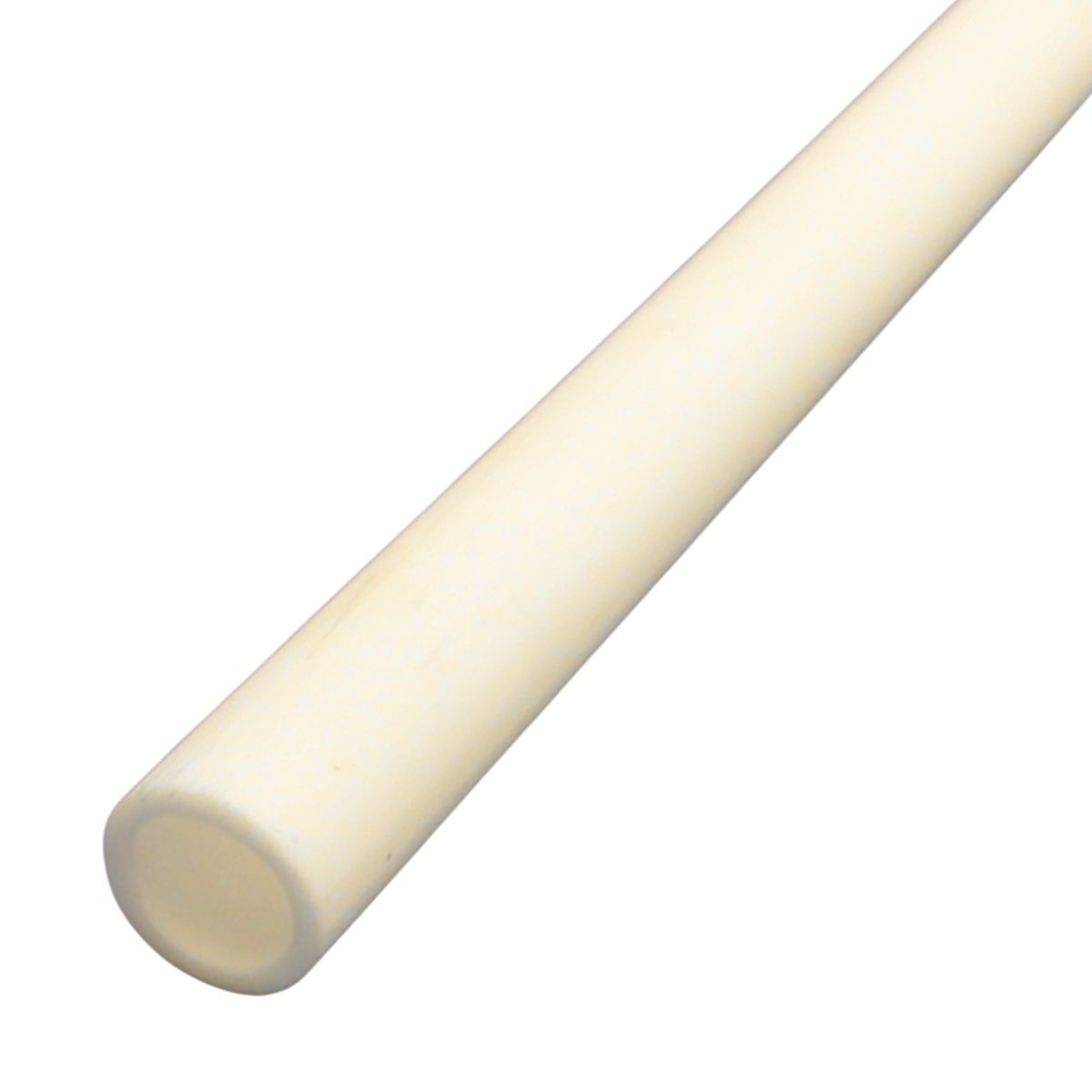
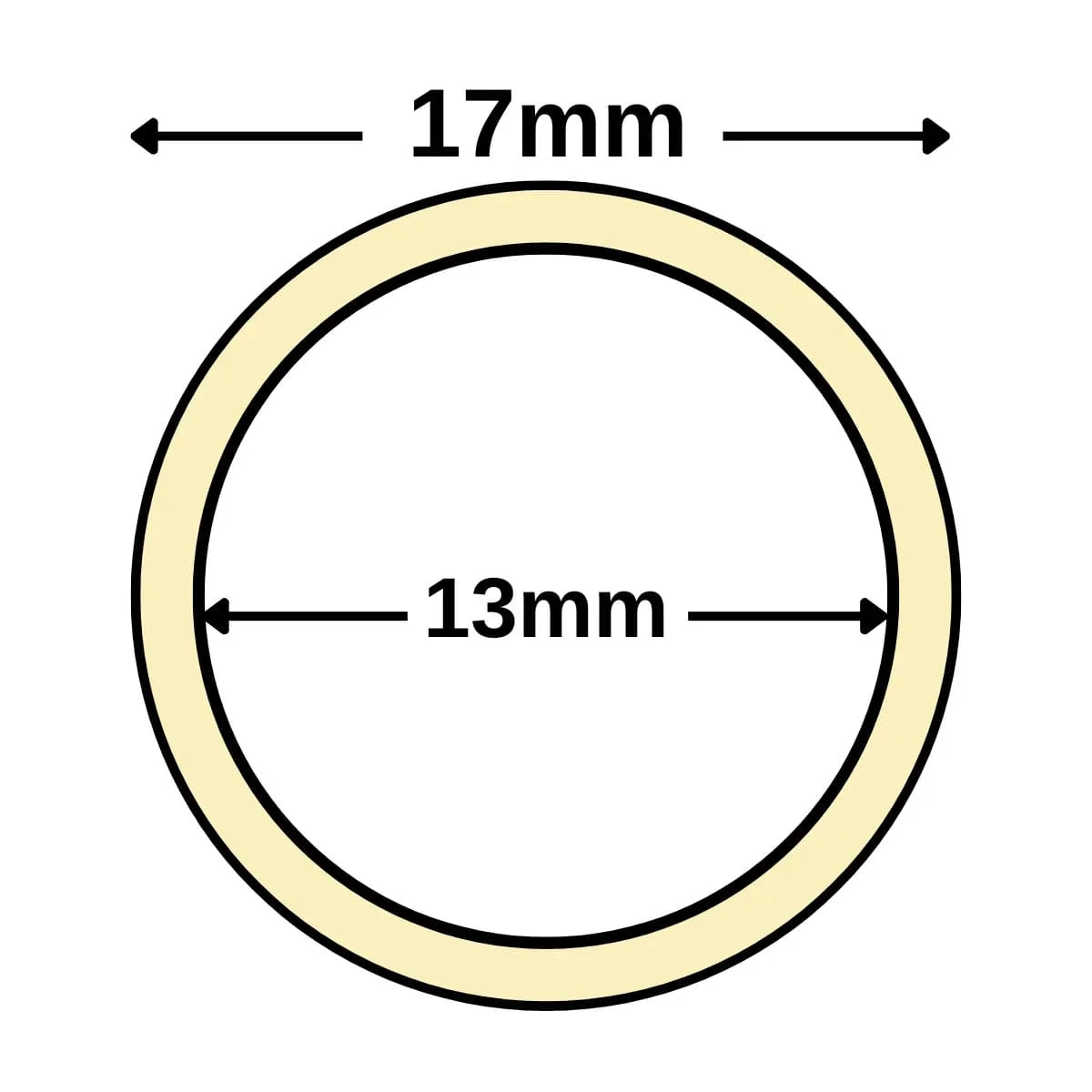
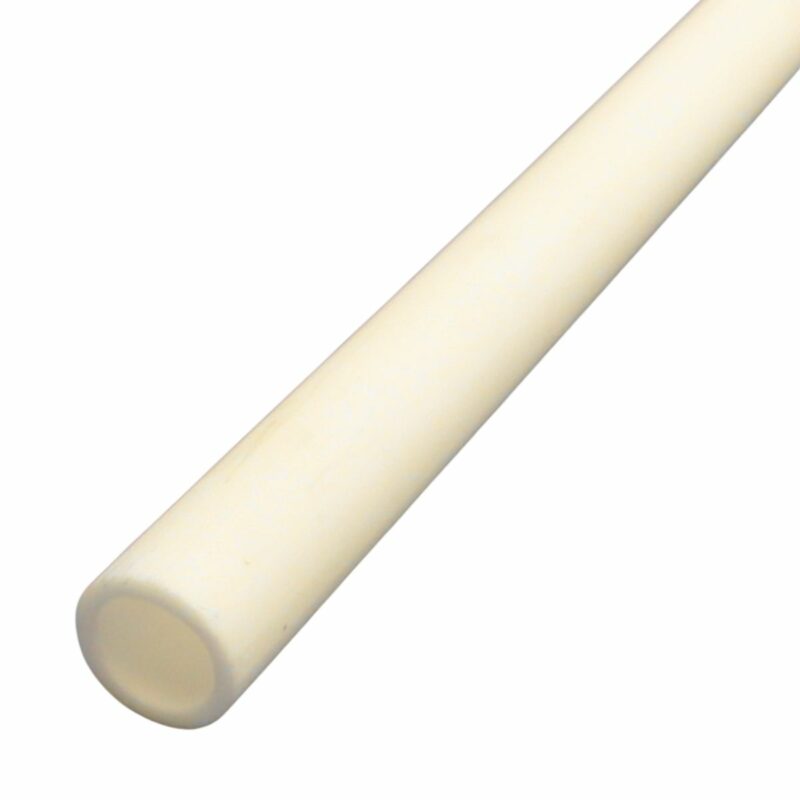
Q: What is a 17mm OD x 13mm ID Recrystalised Alumina Tube with open ends used for?
A: This recrystalised alumina tube is designed to provide electrical insulation and mechanical protection for thermocouple wires and sensor assemblies operating in high-temperature environments. The open-both-ends design allows thermocouple conductors to pass through the entire tube length, making it suitable for furnaces, kilns, heat treatment plants, and custom thermocouple installations.
Q: What is the difference between an open-ended and a closed-end recrystalised alumina tube?
A: An open-ended tube is used to protect and insulate thermocouple wires along their length, while a closed-end tube is designed to shield the thermocouple measuring junction from direct exposure to the process environment. Open-ended tubes are commonly used in custom sensor assemblies and replacement thermocouple builds.
Q: Why choose recrystalised alumina instead of aluminous porcelain?
A: Recrystalised alumina offers higher purity, superior thermal stability, and improved performance at extreme temperatures compared with aluminous porcelain. It is often selected for critical industrial applications where long service life and reliable sensor protection are essential.
Q: Which thermocouple types can be used with this tube?
A: This tube is suitable for use with a wide range of thermocouples, including Type K, Type N, Type R, Type S, and other high-temperature thermocouple assemblies. It is particularly useful where thermocouple wires require insulation and protection in demanding thermal environments.
Q: Why would I choose a 17mm OD x 13mm ID tube?
A: The 17mm outer diameter provides excellent mechanical strength, while the 13mm internal diameter offers ample space for larger thermocouple assemblies, twin-element sensors, multiple conductors, or additional ceramic insulation components used in industrial temperature measurement systems.
Q: Is this tube suitable for furnace and heat treatment applications?
A: Yes. Recrystalised alumina tubes are widely used in industrial furnaces, heat treatment systems, kilns, and laboratory heating equipment because they maintain their insulating properties and structural integrity at very high operating temperatures.
Q: Can this ceramic tube withstand repeated temperature cycling?
A: Yes. Recrystalised alumina is known for its excellent thermal stability and performs well in applications involving repeated heating and cooling cycles. It is commonly used in thermal processing industries where long-term durability is required.
Q: When should I choose an open-ended tube instead of a closed-end tube?
A: Choose an open-ended tube when your primary requirement is protecting and insulating thermocouple conductors throughout their length. A closed-end tube is more appropriate when the thermocouple junction itself requires protection from process gases, contamination, or direct exposure to the measured environment.
Q: Which industries commonly use large-diameter recrystalised alumina tubes?
A: These tubes are commonly used in heat treatment, steel production, glass manufacturing, ceramics processing, power generation, aerospace, research laboratories, and industrial furnace applications where high-temperature thermocouple protection is essential.
Q: What advantage does the 13mm internal diameter provide?
A: The 13mm internal bore provides significant flexibility for larger sensor assemblies, dual-element thermocouples, multiple conductor arrangements, and additional insulation materials. This makes it particularly suitable for heavy-duty industrial temperature measurement applications where robust sensor construction is required.